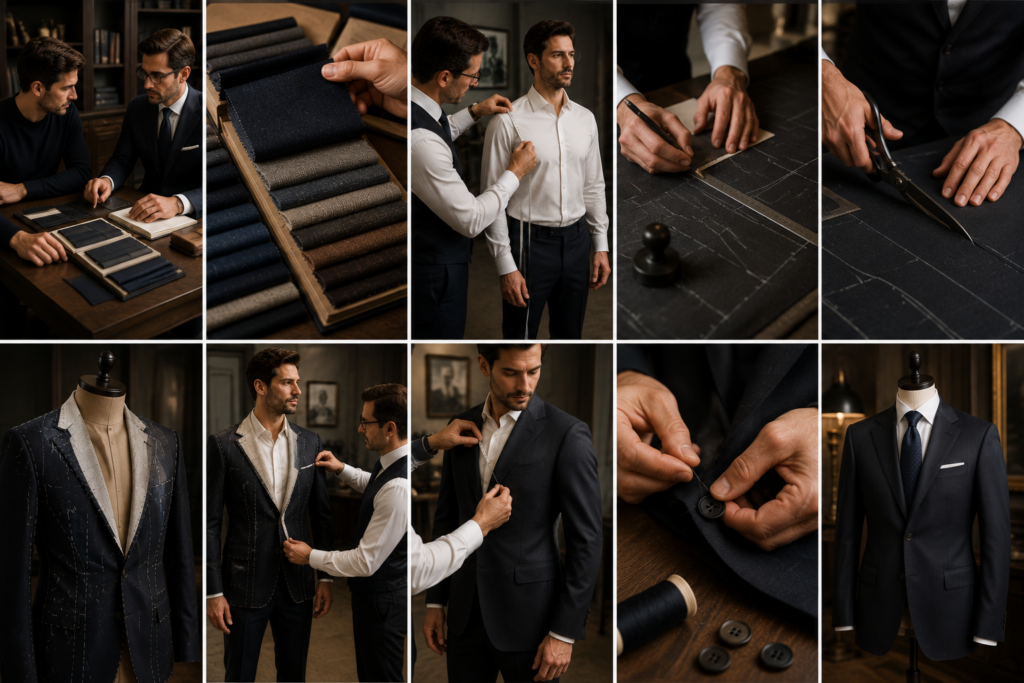
A bespoke suit is more than just clothing—it’s a personalized garment crafted specifically for you. Unlike ready-made apparel, bespoke tailoring combines precise measurements, premium fabrics and expert craftsmanship to create a suit that fits perfectly and reflects your unique style. Understanding the bespoke tailoring process can help you appreciate the attention to detail and artistry involved in creating a truly custom garment.
What Is Bespoke Tailoring?
Bespoke tailoring is the highest level of custom clothing. Every aspect of the garment is designed and constructed according to the client’s exact measurements, preferences and requirements.
From fabric selection to final fitting, each step is carefully executed to ensure superior comfort, fit and elegance.
Step 1: Initial Consultation
The bespoke journey begins with a personal consultation between the client and tailor.
During this meeting, you’ll discuss:
- Style preferences
- Suit purpose and occasion
- Fabric options
- Color choices
- Design details
- Budget and timeline
Whether you’re looking for a business suit, wedding attire or formal wear, the consultation helps establish a clear vision for the final garment.
Step 2: Fabric Selection
Choosing the right fabric is one of the most important decisions in the tailoring process.
Clients can select from a wide range of premium materials, including:
- Wool
- Cotton
- Linen
- Cashmere blends
- Luxury suiting fabrics
The tailor will recommend fabrics based on climate, occasion, comfort and desired appearance.
Step 3: Precise Measurements
Unlike ready-made clothing, bespoke tailoring relies on detailed measurements to create a perfect fit.
The tailor carefully measures:
- Chest
- Shoulders
- Waist
- Hips
- Arms
- Sleeve length
- Trouser length
- Posture and body shape
These measurements form the foundation of the custom pattern used to create the suit.
Step 4: Pattern Creation
After measurements are taken, a unique pattern is created specifically for the client.
This pattern serves as the blueprint for the garment and ensures every component is tailored to the individual’s body structure and proportions.
Unlike mass-produced clothing, no standard sizing is used during this stage.
Step 5: Fabric Cutting
Once the pattern is finalized, the selected fabric is carefully marked and cut by skilled craftsmen.
Precision is essential during this phase, as accurate cutting directly affects the fit, balance and overall appearance of the finished suit.
Every piece is prepared according to the custom pattern specifications.
Step 6: Initial Construction
The suit begins to take shape as tailors assemble the various components.
At this stage:
- Panels are joined together
- Internal canvassing is added
- Sleeves and collars are prepared
- Basic structure is formed
The garment remains unfinished to allow adjustments during fittings.
Step 7: First Fitting
The first fitting is one of the most important parts of the bespoke process.
Clients try on the partially constructed garment while the tailor evaluates:
- Shoulder fit
- Jacket balance
- Sleeve position
- Trouser fit
- Overall silhouette
Any necessary adjustments are marked to refine the fit further.
Step 8: Detailed Adjustments
Based on the fitting results, the tailor carefully modifies the garment.
This stage may involve:
- Adjusting sleeve length
- Refining the waistline
- Improving shoulder structure
- Correcting posture-related fit issues
- Enhancing overall balance
These refinements ensure maximum comfort and a flawless appearance.
Step 9: Final Fitting and Finishing
Once all adjustments are completed, the suit undergoes a final fitting.
The tailor confirms that:
- The fit is perfect
- Movement is comfortable
- Details meet expectations
- Styling preferences are achieved
Buttons, linings, buttonholes and finishing details are completed during this stage.
Step 10: Quality Inspection and Delivery
Before delivery, every garment undergoes a comprehensive quality check.
Tailors inspect:
- Stitching quality
- Fabric alignment
- Button placement
- Pressing and finishing
- Overall construction
Only after meeting strict quality standards is the suit presented to the client.
Why Bespoke Tailoring Is Worth It
The bespoke process requires time, skill and craftsmanship, but the results are unmatched.
Benefits include:
- Perfect fit
- Superior comfort
- Personalized design
- Premium materials
- Long-lasting durability
- Timeless style
A bespoke suit is an investment in both appearance and confidence.
Conclusion
The bespoke tailoring process is a carefully crafted journey that transforms premium fabric into a garment designed exclusively for you. From consultation and measurements to fittings and final delivery, every step focuses on precision, quality and personalization. The result is a suit that not only looks exceptional but also feels comfortable, reflects your personality and stands the test of time.